The Myth of COVID Economic Crisis: Surviving future based on social entrepreneurship

Seems like the end of this world.

Then it all
crashed. Like a make believe illusion of normal life and mythical blissfulness
of existing in delicate bubble of “know all” digital age. Nothing of which
really helped.
All it took was a humble, benign and previously unknown mild
flu to bring ceaseless enactment of macroeconomic soap opera to an
abrupt halt.
The world locked itself in.

The whole idea of human endeavor based on collective pursuit
of common goals whether business, education, sports, travel and governance,
everything became irrelevant. Like proverbial Pacman it just ate into our
civilized defenses of nationality, class, creed, faith, economy and medical
progress. Breaking out at far off Wuhan in China, it spread to other cities,
and countries, forcing people into vast quarantine zones or locked down, as we
heard on news, joked and stayed cocooned in vague watsapp misconceptions that
somehow it would not affect us. But it did. Now after three months of lock down
as we cautiously ventured out, we realized that the world we knew, now no more
exist.

People are
dying. People everywhere are falling sick. Hospitals are brimming with them.
Authorities have lost the grip on situation. More and more, people get infected;
you hear the medical teams taking away the people from next block. The radius
is getting smaller.
There are
no shiny shopping malls, nor crowded schools and colleges. Factories and plants
are deserted as the workers tread back in masses, streaming endless miles on
foot, hungry, tired and jobless. Like the ants leaving a cursed land, this mass
exodus was ominous trailer of the larger tragedy lurking out from bleak horizons.
The usual bluster of “never at rest” city
life has been replaced by harried confused people, mask covering their face, eyes
filled with fear, rushing to nowhere in a big deserted city which is as
clueless as them.

Myth of technological prosperity, global economy and digital
society

The cruel summers of 2020 pandemic and consequential lockdown
erased the years of global progress and technological prosperity trickling from
famous silicon valleys of India and feeding digital economies in smaller cities
and towns. The self-proclaimed guardians of responsible corporate culture
couldn’t hold the fragile ivory forts in face of impending economic doom and have
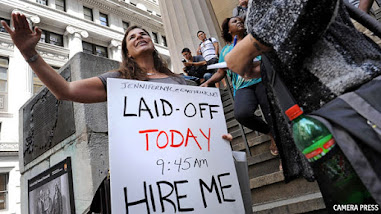
turned their back on helpless workers caught unaware by mass layoffs across industry.
Millions are losing
their jobs. Thousands of small and medium enterprises have shut down. Restaurants, hotels and travel business are
totally wiped off.
But beyond the dystopic filters & knee jerk indignation,
if we look closely and try to logically analyze this current recession, it clearly is not so simple.
 It is not the first time
that animals to human pathogens infection (Zoonosis) have caused contagious
cycle of disease which has affected large section of humanity. Before this there
was Swine flu H1N1, Mad Cow,Nipah and Ebola. We also know of 1918-20 Spanish flu pandemic
with a very similar pattern of spread and impact.
It is not the first time
that animals to human pathogens infection (Zoonosis) have caused contagious
cycle of disease which has affected large section of humanity. Before this there
was Swine flu H1N1, Mad Cow,Nipah and Ebola. We also know of 1918-20 Spanish flu pandemic
with a very similar pattern of spread and impact.

What different has happened now?
At first there are these usual questions. Is it not
result of unbridled commercialization of animal resources through large scale
domestication? The mutually agreed destruction of forest cover by commercial
interest all around the globe for real estate, timber, mining and agriculture
putting increasing ecological strain on native communities but also making
pathogen carrying wild animals to come in frequent human contact resulting
higher probability of contagious transfer. It was as if all the big corporations and
government policies were playing Russian roulette with ecology. Climate
degradation, industrial toxicity or Pandemic, we were always, one disaster away.

But all
these industries have been consistent in denying their role in ecological destruction, while unabashed in reaping
the commercial benefits ,have been first to declare their inability to contribute "any more" toward their communities and governments when the crisis hit home. Till
recently they were proclaimed champions of Neo liberal economy. There is no logic
why the robust economies and their corporate commanders, across the world declared SOS within 100 days of COVID 19 pandemic. Where is all the money gone? Or Was there a larger systematic failure in this technology
driven global economic model which just got aggravated because of ensuing COVID
crisis.
Given the huge financial funding made available to corporate
sectors, till recently enjoyed one of the highest per capita industrial consumption
in human history and with technological capacity at its peak, then why did the
whole economic edifice, just collapsed
under its own weight.

Yes now you can see. It was always there like an elephant in the room. But as we are used to believing in solemn continuity of existing arrangements,we failed to acknowledge and accept the hard truth. The big corporate players, with easy access of public banking system and financial back up were unable to transform into agile business units of new economy. There whole focus of business was restricted to profit extraction from society rather than value addition to products and services. They just blotted their entrepreneurial capacity with more of the same. It was sliding downhill from the word go. The glut started with aviation sector, then auto sector lost speed and then banking sector got the chills.

Yes now you can see. It was always there like an elephant in the room. But as we are used to believing in solemn continuity of existing arrangements,we failed to acknowledge and accept the hard truth. The big corporate players, with easy access of public banking system and financial back up were unable to transform into agile business units of new economy. There whole focus of business was restricted to profit extraction from society rather than value addition to products and services. They just blotted their entrepreneurial capacity with more of the same. It was sliding downhill from the word go. The glut started with aviation sector, then auto sector lost speed and then banking sector got the chills.

The entire resource mobilization for new liberal economy was tied down to urban or regional centers and failed to reach the wider population at town and district level. The public spending on health care was never a priority. Indian healthcare is dominated by the private sector. Given the enormity of capital requirement and constrained public funding, a large population is devoid of medical cover. The Make in India and localization of entrepreneurial focus was critical to arrest the growing snowball of economic crisis. But it came too late and too little.
COVID 19 was last straw that broke camel’s back.

The magnitude and complexity of reverse migration of unpaid workers
from cities during COVID crisis and tsunami of immediate layoff and closing of
units just within months of lock down can be easily explained on over-dependency
of business sector on short term profit making and lack of sense of boarder
responsibility toward social issues. Driving high profit margins in time of
economic boom and cutting cost by disposing off headcount, while demanding
bailout & tax cuts for themselves, reflects extreme lassitude that grips
our business leaders.

We need to
disrupt this cycle. Digitalization and skilling are the only way to
initiate this process. Rather than preserving the redundant industrial base promoting
mindless consumption of non-local products, tottering on financial bailout , consisting
of lethargic and obsolete business empires, a more community oriented social
capitalism is, what is needed. A country of few rich billionaires with billion
poor people will always be prone to any disaster. Growth of GDP is bullshit. We
are on our way to become most unequal society in world.
The whole
idea of giving community readymade customized economic molds to “fit into” is
the very basis this problem. A country especially like India needs to evolve
grassroots level “social innovation” based income generating small and micro
business ideas entrenched in community collaboration to prepare for long term
prosperity & self-sufficiency.


We need to promote and encourage social innovation.
A social innovation is the creation of services and product which fills the existing gap and provides affordable, efficient and scalable value alternative to community at large. Skill India is right step in that direction, provided we get these models operational at ground. There are number of available examples that points to presence of large pool of such vibrant social innovators and dynamic local entrepreneurs at different levels of community.
A social innovation is the creation of services and product which fills the existing gap and provides affordable, efficient and scalable value alternative to community at large. Skill India is right step in that direction, provided we get these models operational at ground. There are number of available examples that points to presence of large pool of such vibrant social innovators and dynamic local entrepreneurs at different levels of community.
 |
| Arunachalam Muruganantham inventor of a low-cost sanitary pad-making machine |
All we need
is to provide them an institutional platform and supportive ecosystem. Micro
finance and technical mentoring can act as catalyst to speed up the process of developing
series of local income generating social units.
Such social innovation that collaborates with society in
value creation, rather then fly by night kind of “startup” dreams, are more
suitable to Indian background and will
go on long way in rejuvenating Indian economy post COVID crisis. Such social
innovations can be beneficial in any sector from agribusiness, digital
services, education and healthcare. While government has a responsibility
toward the institutional and financial support, such social enterprise are not
expected to solely depend on them but create sustainable income for all
stakeholders ,even after reinvesting portion towards scaling the future capacity.
 |
| Husk Power Systems develops electricity with biomass waste |
There is
need for institutional support and it cannot be just discounted for any reason,
but it has to be structured properly. What we need is inclusive and community
centered growth strategies, not an ultra-corporatized economic model that leads
to wealth accumulation at points that locks it from flowing into overall social
well being.
 |
| Harish Hande Indian social entrepreneur, who co-founded SELCO won Ramon Magsaysay Award for 2011 |
It’s time
to back the people, who vote governments in power expecting their long term
welfare. The economic recovery package should deliver immediate solutions by also
boasting social innovation based entrepreneurship at district and village
level. The big corporate players should be made accountable for social
responsibility at time of COVID while seeking public funds.

For example financial institutions should seek some degree of
social commitments from corporate prior to doling out bail out packages.
Business receiving financial packages should be asked to retain workers, and
ensure that once the crisis is over they will invest in skill development and preventive
health care of employees.
Denmark is a sterling example of giving priority to social equity while distributing stimulus package to industries. By excluding firms that incorporate themselves in famous tax havens they ensured that domestic revenue contributors are given importance. Denmark’s government also agreed to cover the cost of employees’ salaries at private companies as long as those companies do not fire people. The social thought behind this big move is to help companies to preserve their relationship with their workers. It’s going to be harder to have a strong economic recovery if companies have to spend time hiring back, workers that have been fired – This also allows households to retain their incomes, preventing the virus from spreading, and making it easier for businesses to resume production once the crisis is over.
Denmark is a sterling example of giving priority to social equity while distributing stimulus package to industries. By excluding firms that incorporate themselves in famous tax havens they ensured that domestic revenue contributors are given importance. Denmark’s government also agreed to cover the cost of employees’ salaries at private companies as long as those companies do not fire people. The social thought behind this big move is to help companies to preserve their relationship with their workers. It’s going to be harder to have a strong economic recovery if companies have to spend time hiring back, workers that have been fired – This also allows households to retain their incomes, preventing the virus from spreading, and making it easier for businesses to resume production once the crisis is over.
 Such
proactive strategies also prevents hostile corporate take overs and can push
the business to do more in CSR when things return to normal and invest in
sustainable technologies supporting local communities like preventive health care, renewable energy installations and waste recycling.
Such
proactive strategies also prevents hostile corporate take overs and can push
the business to do more in CSR when things return to normal and invest in
sustainable technologies supporting local communities like preventive health care, renewable energy installations and waste recycling. It’s very tough to survive at present times. But things will improve and this too shall pass. But letting things remain as they are, will result in prolonged business and livelihood crisis to masses. We need to stay positive and prepare for future opportunities post COVID 19 pandemic.
The
famous musings of Dickens will really sums up the present, when it’s
over and we survive this to see a better tomorrow.
“It was the best of times, it was the worst of times, it was
the age of wisdom, it was the age of foolishness, it was the epoch of belief,
it was the epoch of incredulity, it was the season of Light, it was the season
of Darkness, it was the spring of hope, it was the winter of despair, we had
everything before us, we had nothing before us, we were all going direct to
Heaven, we were all going direct the other way – in short, the period was so
far like the present period, that some of its noisiest authorities insisted on
its being received, for good or for evil, in the superlative degree of
comparison only”…
Gitesh Sinha
Gitesh Sinha

Brilliant article.
ReplyDeleteI have read this article three times... Ground reality with hope and solution.. I want to salute him for this mind blowing article....
ReplyDeleteThx for your good words
DeleteVery enlightening..
ReplyDeleteNice article
ReplyDeleteWaah.
ReplyDeleteKeep it up.
Very good.
Thank you all for your kind words and encouraging comments. I hope my article in some small way, can help you think about the larger issue and to do something which support social innovation and enterprise. Support small community business and social entrepreneurs, to strengthen local economy.
ReplyDeleteIt is a fine piece of writing. Comprehensive and talks about it all
ReplyDelete